Protecting Our Apex Predators
 by
Jacqueline Herbst
· · Updated · 3 min read
by
Jacqueline Herbst
· · Updated · 3 min read

As a senior marine scientist at the Oceanographic Research Institute (ORI), Dr Ryan has built his career studying sharks and tracking their movements using advanced acoustic tagging technology across the western Indian Ocean - from the Southern Ocean to the Seychelles.
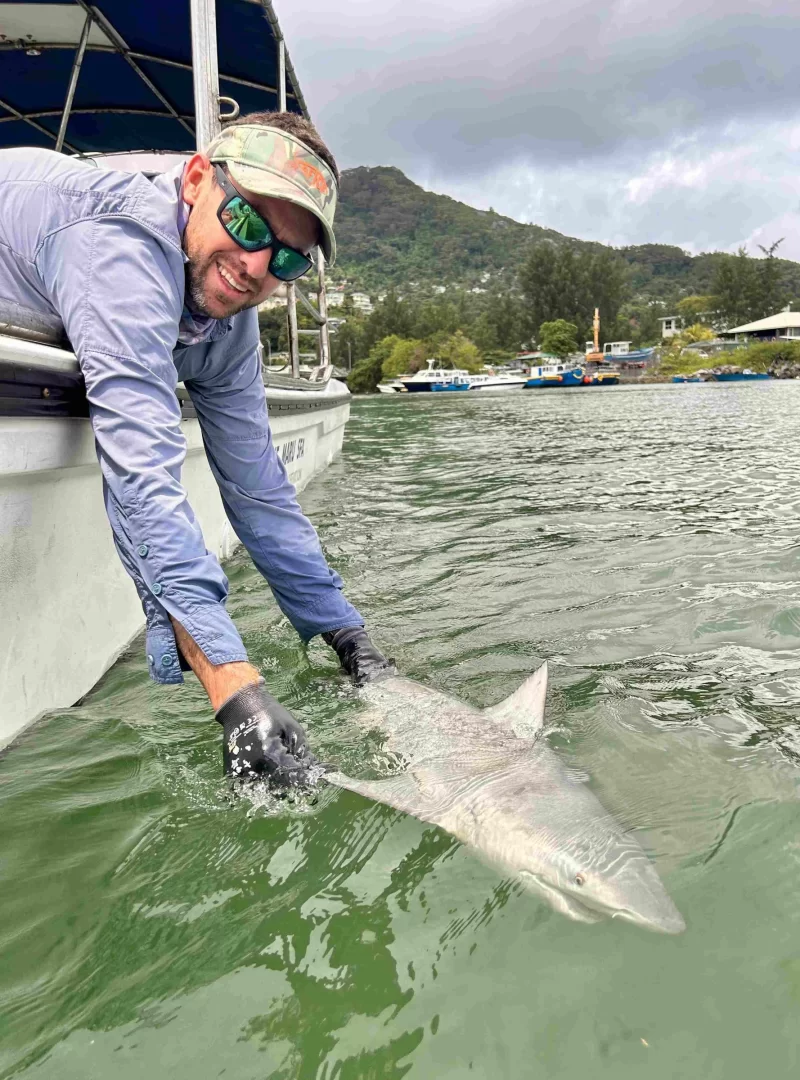
Because most sharks don’t surface, Dr Ryan explains, satellite tags are often ineffective. The team instead relies on acoustic telemetry, underwater tags attached to sharks that transmit a unique ID code to acoustic receivers. “Acoustic telemetry is the bread and butter of tracking sharks because they work on all sharks and they last for up to 10 years,” Dr Ryan says.
These tags are detected by a growing network of receivers along the South African and Mozambican coastlines. As more partners join, the array continues to expand. The data is collated and distributed by the Acoustic Tracking Array Platform (ATAP), based in Makhanda and hosted by the South African Institute for Aquatic Biodiversity (SAIAB). “This has been a really effective way to understand the long-term migrations and habitat use of sharks.”
Dr Ryan’s research centres on the spatial ecology of sharks: their preferred habitats, migration routes, timing, how far they travel, whether they return to the same sites annually, and what drives these patterns - environment, food or reproduction.
His work focuses on the western Indian Ocean, with current projects in the Seychelles, Mozambique and South Africa. A large collaborative French initiative may extend this research to the Comoros, Mayotte, and other French Indian Ocean territories.
Central to the success of his work, Dr Ryan says, is building long-term relationships with marine protected area managers and maintaining consistent data collection. “Going back to the same places again and again, those long-term relationships and the long-term data collection are really what makes the difference. It takes a long time to collect data on these very long-lived species - some bull sharks mature at 20 years old. So, to really understand what they do and improve conservation for them, you’ve got to put the time in - 10, 20 years, and you start to scratch the surface.”
Dr Ryan’s work matters because sharks and rays are South Africa’s most threatened animal groups - more so than any reptiles, frogs or mammals. Their vulnerability comes down to biology: they live long lives, mature slowly and produce very few young. As he explains, many species have shifted into endangered or critically endangered categories within his career, and two local sawfish species have disappeared entirely in South Africa since the 1990s due to habitat loss and overfishing.
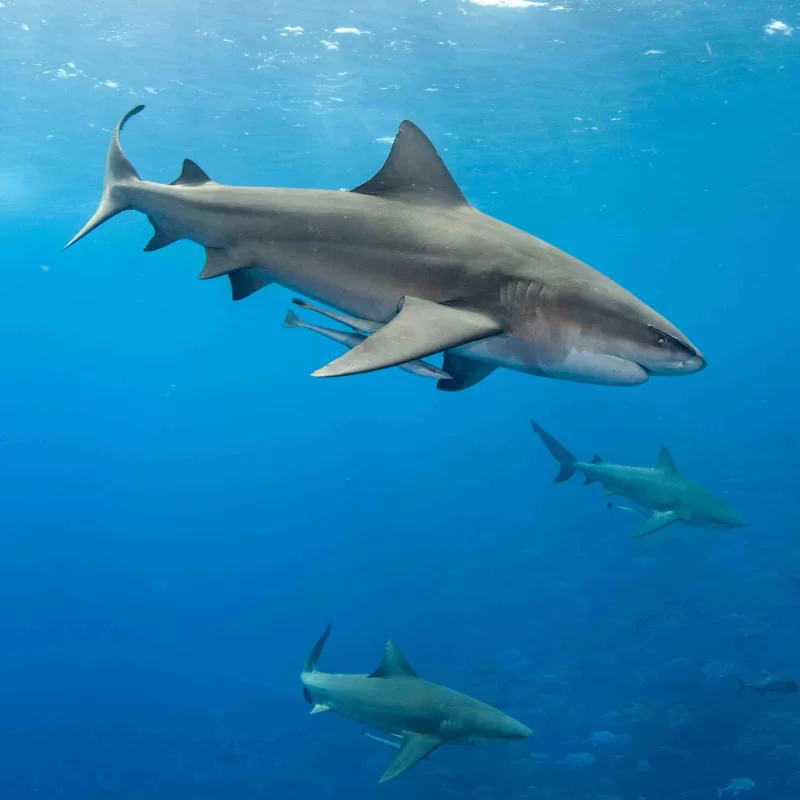
He stresses that people need to understand how much shark and ray numbers have declined, recognise the importance of the refuges they rely on, and support conservation efforts. Mapping species behaviour and migration corridors is essential for better protection.
A major part of Dr Ryan’s research also highlights the interconnectedness of the western Indian Ocean region. Countries share the same shark populations - there are no fences at sea. A single shark might support artisanal fishing in Mozambique, attract dive tourism in South Africa, and encounter shark nets for bather safety in the same waters. “They’re all the same animals,” he says.
His findings show how far-ranging species like bull and tiger sharks link ecosystems across the region. As top predators and keystone species, protecting them is critical to maintaining the health of the entire marine environment.
Instagram: @african_shark_diaries
Written by
Jacqueline Herbst
Jacqui brings a style of storytelling that informs and engages readers.
READ MORE

Southern Africa celebrates KZN resort achieving benchmark in best practice for green buildings
by The Ballito Writer · September 17, 2026

Inside-Out Skincare
by The Ballito Writer · September 17, 2026

iLembe Business Confidence Softens at Mid-Year, but Firms Stay Upbeat on the Second Half
by Justin Scott · August 19, 2026